Employees in California are protected from being fired for taking FMLA under both federal law and the California Family Rights Act (CFRA). If an employer retaliates, you can pursue legal options, including reinstatement, back pay, and damages for fmla violations. Getting help from an employment lawyer can help you with the claim and make sure your employee rights are fully protected.
Have you been terminated for taking FMLA leave in California? Mercer Legal Group helps employees understand their rights under federal and state law, including CFRA protections. Our experienced team of FMLA employment lawyers can guide you through filing claims, gathering evidence, and pursuing compensation for lost wages, benefits, and emotional distress. Contact us today to protect your job and ensure your FMLA rights are fully enforced.
In this blog, we will explain your rights under FMLA and CFRA in California, what counts as illegal termination, and how to take action if you’re fired for taking medical or family leave.
What Is Fired For Taking FMLA in California?
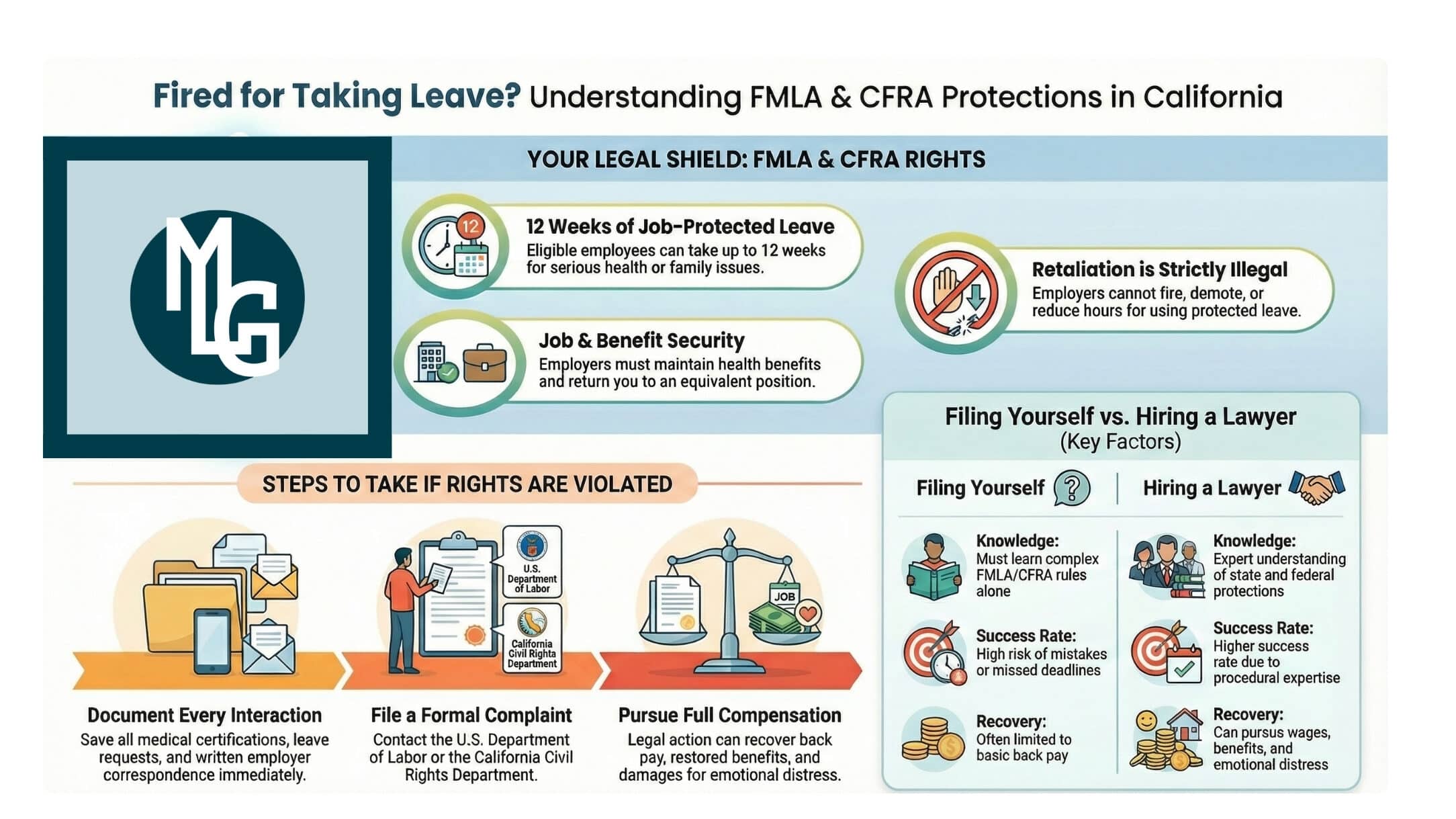
Fired for taking FMLA in California can happen when employers retaliate against employees for using their leave rights. The Family and Medical Leave Act (FMLA) lets eligible employees take unpaid, job-protected leave for serious health conditions or family health issues. California adds the California Family Rights Act (CFRA), which expands coverage and sometimes includes paid sick leave.
Employers cannot punish or fire someone for taking FMLA or CFRA leave. Doing so may count as an FMLA violation. Employees can request reasonable accommodations when returning to work. This ensures employees can resume duties without discrimination or retaliation.
Legal consequences for wrongful termination under FMLA and CFRA are serious. Employees may recover lost wages, benefits, and damages. Understanding your rights helps protect against job loss due to family health issues or serious personal health conditions.
How Do Legal Rights Protect Employees?
Under the Medical Leave Act, FMLA protections give employees in California important rights. Eligible employees can take up to 12 weeks of unpaid leave for family care or serious health conditions. FMLA requires that this leave be job-protected, meaning employees should not lose their position solely because they took approved leave.
California law expands these rights under CFRA, giving employees additional support for family care. Employers must maintain health benefits during the leave, just as if the employee was actively working. Paid time off, if available, can sometimes be used concurrently with FMLA or CFRA leave.
According to our associate attorney at Mercer Legal Group, Sara Salinas, “Being fired shortly after requesting or returning from protected leave is a major red flag that your rights may have been violated.”
Employees are entitled to return to the same or an equivalent position after leave. Even during company-wide layoffs, employers cannot use FMLA leave as a reason to single out or target employees for termination. FMLA rights also provide legal options if an employer interferes with or retaliates against leave. Understanding these protections ensures employees can balance family care and work without risking their job or benefits.
Examples of FMLA Violations
When employers infringe upon an employee’s entitlement to protected leave, they commit FMLA violations. For instance, retaliation for taking leave is a prevalent instance. An employee using FMLA for a serious health condition, pregnancy disability leave, or caring for family members may face demotion, reduced hours, or termination. These actions violate federal and California law, even if the employee had legitimate reasons for his or her absence.
Another example is the denial of reasonable accommodations or paid sick leave. Employers must honor job protection and allow employees to use FMLA leave for up to four months if medically necessary. Denying paid sick leave or failing to provide reasonable accommodations, like flexible scheduling for intermittent leave, constitutes a violation. Employees must be able to take leave without fear of losing their position or benefits.
Steps to Protect Yourself Before Taking a Family and Medical Leave

Taking FMLA leave in California is your right, but proper preparation helps protect your job and benefits. Employees who plan can avoid disputes and ensure their protected time is respected. Following clear steps makes it easier to prove leave was taken for valid reasons and strengthens any potential legal claim. We recommend following the steps below before taking medical leave:
1. Proper Documentation of Medical Reasons
Keep detailed medical records and certifications to show that the leave is necessary for valid reasons. This documentation supports intermittent leave or extended absences and proves the employee’s request is legitimate.
2. Notifying Your Employer and Confirming Approval in Writing
Inform your employer as soon as possible about your need for leave and get confirmation in writing. This ensures that your protected time is recognized and reduces the chance of disputes when the employee returns.
3. Using Paid Time Off Concurrently with FMLA
If available, use accrued paid time off concurrently with FMLA leave. This can maintain income while keeping the employee’s job protected and demonstrating good-faith compliance with company policies.
Hypothetical Case Example
Jane, a California employee, needed intermittent leave to care for her seriously ill parent. She provided medical certifications, submitted her employee’s request in writing, and coordinated paid time off with her leave. When her employer tried to give her a negative performance review, Jane showed her documentation and confirmed approval emails. Because she took these steps, the company reinstated her position, respected her protected time, and she successfully avoided wrongful termination.
What Are Legal Processes and Procedures for Filing an FMLA Claim?
There are clear legal processes to follow if the company fires an employee for taking FMLA. Acting quickly helps protect rights and potential compensation. If you have been fired for taking a medical leave, we recommend following the steps below to file a claim:
Step 1: Document Everything
Keep records of leave requests, employer correspondence, medical certifications, and any disciplinary actions. These documents help prove FMLA violations and support claims under fair employment standards.
Step 2: Contact the Department of Labor
File a complaint with the U.S. Department of Labor’s Wage and Hour Division or the California Department of Fair Employment and Housing. The Equal Employment Opportunity Commission can also help if discrimination overlaps with the FMLA violation.
Step 3: Seek Legal Counsel
An employment lawyer can guide you through filing a lawsuit if needed. They guarantee the enforcement of your rights under the FMLA and CFRA, and they have the authority to seek reinstatement, lost wages, and damages for emotional distress.
Step 4: Follow Court Procedures
Your FMLA attorney will handle filings, discovery, and hearings. Courts have the authority to grant compensation, benefits, and occasionally even court costs, guaranteeing the protection of employees under both state and federal laws.
How Do You Gather Evidence And Documentation for an FMLA Claim?
Gathering evidence for an FMLA claim is crucial. Start with medical records and medical certifications that show the need for leave for medical reasons. These documents prove the leave was legitimate and protected under the law.
Next, collect all correspondence with your employer about taking medical leave. Emails, letters, or messages showing approval or denial can support claims of FMLA interference. Keep records of any disciplinary actions that occurred during or after your leave.
Also, gather performance reviews before and after taking leave. Positive reviews before taking leave can show termination or discipline was not due to job performance.
According to Simon Moshkovich, our founding partner at Mercer Legal Group, “Having an experienced employment lawyer levels the playing field against employers who have legal teams working to protect the company.”
Filing FMLA Claims Yourself vs. Hiring an Employment Lawyer
When facing a potential FMLA claim, employees often wonder whether to handle it themselves or hire an employment lawyer. We have prepared the table below to help you weigh the risks, benefits, and potential outcomes of each approach.
| Factor | Filing Yourself | Hiring an Employment Lawyer |
|---|---|---|
| Knowledge of Law | Must learn the federal FMLA and California CFRA rules on your own | A lawyer understands state and federal law, including job protections and paid leave entitlements |
| Documentation | Employee must track medical records, emails, and performance reviews | “A lawyer can help organize evidence to strengthen the case, including intermittent leave and employees’ requests, while also protecting you from your employer attempting to label your claim as a frivolous lawsuit. |
| Likelihood of Success | Risk of mistakes, missed deadlines, or improperly filing complaints | Higher chance of success due to expertise in avoiding common FMLA claim errors |
| Compensation Recovery | May only recover basic back pay; it’s hard to claim emotional distress or attorney fees | Can pursue full compensation, including lost wages, benefits, emotional distress, and court costs |
| Time & Stress | Employee handles all research, filings, and communication with the employer and agencies | A lawyer manages filings, negotiations, and court procedures, reducing stress for the employee |
| Cost | The service is free, but employees face a risk of receiving a lower recovery amount. | Legal fees may apply, but many firms offer free consultations and may work on contingency |
What Are the Potential Outcomes and Compensation for an FMLA Claim?

If an employer wrongfully terminates an employee for taking medical leave, there are several possible outcomes. The employer may be required to reinstate the employee to the same or a comparable position. This ensures the employee faces no undue hardship for using his or her leave.
While dealing with our clients, we always tell them, “Successful FMLA claims can result in reinstatement, lost wages, restored benefits, and compensation for emotional distress.” Compensation can include lost wages and benefits for the period of unpaid time.
Workers who experience emotional distress from their termination may also receive compensation. Courts may consider potential violations of FMLA when awarding relief.
In some cases, employees can recover court costs and attorney fees. This encourages employers to follow the law and avoid retaliating against staff. Understanding these outcomes helps employees protect their rights and address any FMLA or CFRA violations effectively.
Ready to Fight for Your FMLA Rights?
Being fired for taking FMLA in California is illegal under both federal law and the California Family Rights Act (CFRA). Eligible employees can take up to 12 weeks of unpaid, job-protected leave for serious health conditions or family care. Employers cannot retaliate, deny benefits, or interfere with FMLA rights. Employees should keep detailed records of leave requests, medical certifications, employer communications, and any disciplinary actions.
If your rights are violated, legal recourse is available. You may be entitled to reinstatement, back pay, benefits, and damages for emotional distress. Filing a complaint with the U.S. Department of Labor or the California Department of Fair Employment and Housing is a key step. Consulting a qualified FMLA lawyer can help protect your rights, gather evidence, and pursue claims effectively. Acting quickly increases your chances of a successful outcome.
Worried about being fired for taking FMLA in California? Mercer Legal Group specializes in defending employees against unlawful retaliation and FMLA violations. Our expert employment lawyers in California provide expert guidance on reinstatement, lost wages, and legal remedies, ensuring your rights are fully protected. Reach out to us to schedule a free consultation today and get the support you need to fight for your job and benefits.
Frequently Asked Questions
In California, firing someone for taking FMLA leave is illegal and can result in serious financial and legal consequences. This FAQ answers common questions about your rights, potential remedies, and steps to take if you face retaliation for using protected leave.
Can You Be Fired for Taking FMLA in California?
No, in California, it is illegal for an employer to fire you for taking FMLA or CFRA leave, as these laws protect your right to medical and family leave. Termination for using protected leave can be considered retaliation, giving you grounds for a legal claim.
What Are the Consequences of Being Fired for Taking FMLA Leave in California?
Being fired for taking FMLA leave in California can allow you to file a wrongful termination or retaliation claim against your employer, even if they cite performance issues or changes to your job duties. You may be entitled to reinstatement, back pay, damages for lost benefits, and possibly emotional distress or attorney’s fees.
What Are the Potential Costs Associated With Being Fired for Taking FMLA, California?
The potential costs of being fired for taking FMLA leave in California include lost wages, lost benefits, and reduced retirement contributions. You may also face legal fees, medical expenses, and emotional distress costs while pursuing a retaliation or wrongful termination claim.
What Are Common Mistakes People Make When Dealing With Being Fired for Taking FMLA in California, and How Can They Be Avoided?
Common mistakes include failing to document leave requests and employer communications, missing filing deadlines, or not knowing your legal rights under FMLA/CFRA. These can be avoided by keeping detailed records, acting promptly to file complaints with the DFEH or U.S. Department of Labor, and consulting an employment attorney early.
Disclaimer: The information provided on this blog is for general informational purposes only and does not constitute legal advice. Reading this content does not create an attorney-client relationship. Laws and regulations vary by jurisdiction and may change over time, so you should consult a qualified FMLA attorney for advice regarding your specific situation. Past examples, case studies, or hypothetical scenarios are illustrative only and do not guarantee similar results.