
Sexual Harassment Lawyer in Los Angeles

Mercer Legal Group represents Los Angeles and California employees in sexual harassment claims under FEHA and Title VII. If the conduct at work, the response to your complaint, or the impact on your job does not feel right, we can help you understand what the law allows.

Google Maps office location

At Mercer Legal Group

4.8

Our promise to you

What Counts as Sexual Harassment Under California Law?

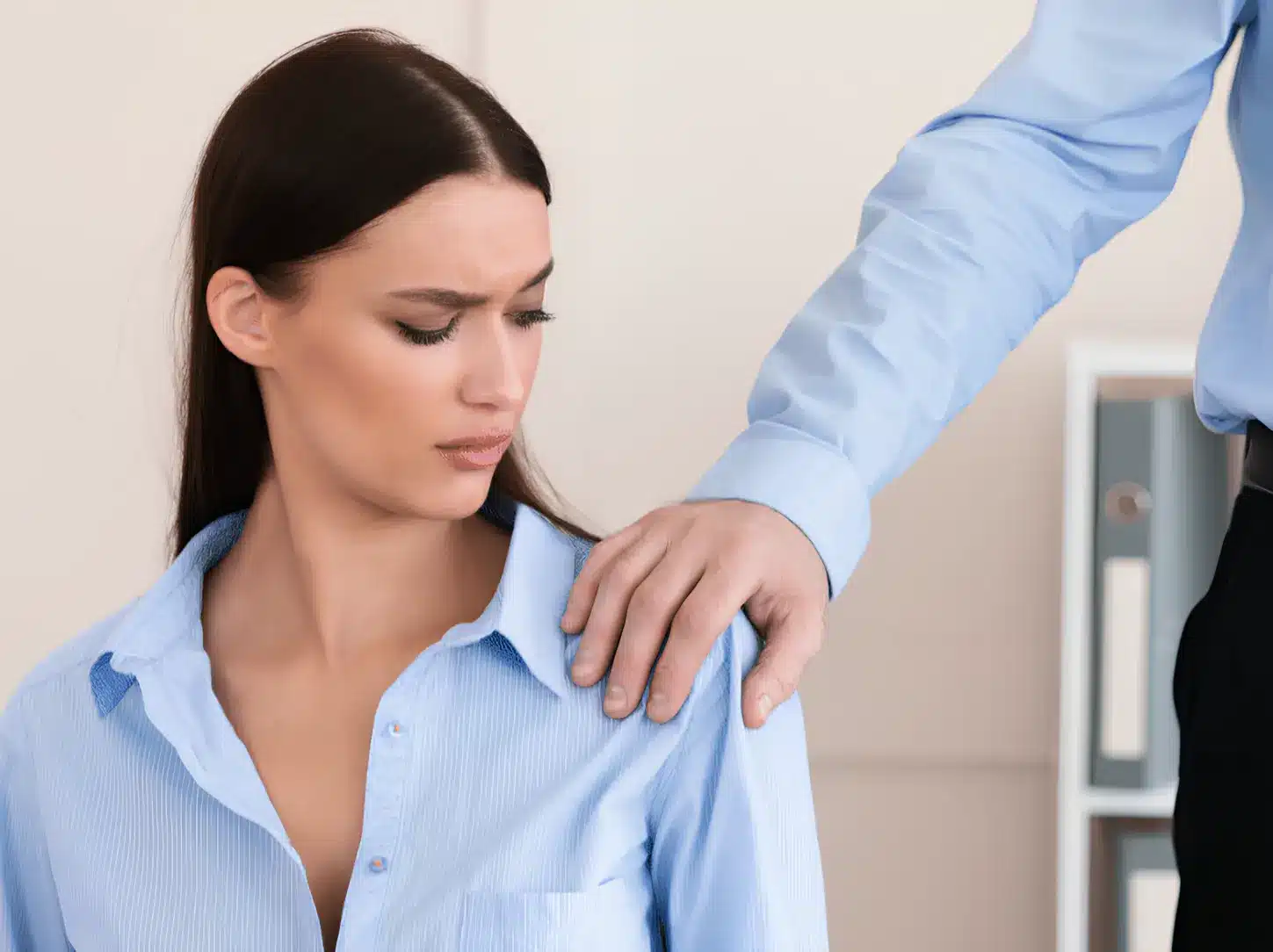
Under California’s Fair Employment and Housing Act (FEHA, Gov. Code §12940(j)), sexual harassment at work takes two forms, and both can support a claim. Quid pro quo harassment is when a manager or anyone with authority over your job links a workplace decision — a promotion, a raise, a schedule change, continued employment — to a sexual request or conduct. Hostile work environment harassment is severe or pervasive sex-based conduct that changes the conditions of your job. That can be comments, touching, repeated propositions, sexual imagery, or conduct directed at you because of your gender, sexual orientation, or gender identity. One serious incident can be enough; lower-grade conduct usually has to be repeated. If you are not sure which category fits, an attorney can read the facts and tell you.

Patterns Mercer Legal Group Sees Often

The patterns we see most often share a common thread: the conduct continued after the employee objected, or the employer ignored the complaint. A supervisor’s repeated comments, jokes, or propositions that the employee asked to stop. A pattern of touching, brushing, or invading personal space that continued after the employee objected. A coworker’s conduct that the employer was told about but did nothing to stop. Conduct tied to a promotion, raise, or shift the employee was asking about. Retaliation after reporting harassment — schedule cuts, reassignment, write-ups, or termination. Forced resignation after the employer ignored a complaint, also called constructive discharge.
Los Angeles area where Mercer Legal Group serves California employees

How Does California Law Protect Sexual Harassment Victims?

California is generally one of the strongest sexual harassment jurisdictions in the country, and that protection applies statewide. FEHA prohibits sex-based harassment by employers with one or more employees for harassment claims. Employees have three years to file a complaint with the California Civil Rights Department (CRD). Title VII federal harassment protections apply to employers with 15 or more employees, with EEOC filing deadlines of 180 to 300 days in California. California employers have a legal duty to take all reasonable steps to prevent harassment and to investigate complaints fairly when they receive them. A failed response can itself create liability. FEHA §12940(h) prohibits retaliation against an employee who reports harassment, opposes harassment, or participates in an investigation.
Mercer-Legal-Group

Contact Mercer Legal Group today to

Schedule a consultation

Mercer Legal Group reviews employment law claims carefully, explains available options, and pursues appropriate remedies when the facts and law support them. Every case is different, and no attorney can guarantee a specific result.

What Damages Can You Recover in a Sexual Harassment Case?

A California sexual harassment claim can recover both your economic losses and damages for the harm the conduct caused. Under FEHA (Gov. Code §12965(b)), a prevailing employee can also recover attorney’s fees and costs, and there is no statutory cap on damages. Available remedies may include:

  • Back pay and front pay (including constructive discharge cases)
  • Emotional distress damages
  • Reinstatement
  • Attorney’s fees and costs under FEHA
  • Punitive damages in cases involving malice or oppression
  • Injunctive relief, including workplace policy changes

Every case is different, and no attorney can guarantee a specific outcome.

What Should You Do If You're Sexually Harassed at Work?

Start by protecting the record and the deadline. Write down each incident, report the conduct in writing if it is safe, and save how the employer responds. Speak with an attorney before you resign or sign severance. A FEHA sexual harassment complaint must reach the California Civil Rights Department within three years of the last incident (Gov. Code §12960(e)).

  1. Document the conduct. Each incident — date, what happened, who was present, how you responded. Pattern evidence matters more than any single incident.
  2. Report it in writing if it is safe. A short HR or supervisor complaint creates a record the employer cannot later deny.
  3. Save the response. What the employer did (or did not do) after the report often becomes the heart of the case.
  4. Talk to an attorney before resigning or signing severance. Constructive discharge claims depend on what the employee tried before quitting.

How Mercer Legal Group Helps

Our California sexual harassment attorneys read the facts, identify whether the case fits quid pro quo or hostile environment, file the right administrative charge, and pursue available remedies when the facts support them. From the first call you talk to a senior attorney. Cases are handled on a contingency-fee basis with no upfront cost.

Mercer Legal Group focuses on harassment cases tied to a protected characteristic or protected activity. We generally do not handle standalone wage-and-hour disputes, unpaid commission claims, Kaiser Permanente matters, public agency claims, or ordinary workplace disputes with no protected legal issue.
Mercer Legal Group office image

FAQs

Sexual harassment cases often hinge on what happened AFTER the employee reported, not only the conduct itself. Below are the questions clients ask us most.

California courts under FEHA accept circumstantial evidence and credibility-based proof in sexual harassment cases. Contemporaneous notes, texts, emails, witness statements from coworkers who were told about the conduct, and the employee’s response pattern all count. Los Angeles juries weigh the totality of evidence — they do not require direct witnesses to find harassment occurred.

It can be, depending on severity. California courts look at the totality of the circumstances — a single severe incident (assault, an extreme proposition tied to a job decision, an extreme slur) can meet the FEHA standard on its own. Lower-grade conduct usually has to be repeated. Los Angeles courts assess whether the conduct was objectively offensive and altered the conditions of work.

Yes. California employers have an affirmative duty under FEHA to take reasonable steps to prevent and address harassment. A failed or absent response to a credible Los Angeles workplace complaint can support liability against the employer and can also support a separate retaliation claim if the employee was punished after reporting.

Possibly, under California’s constructive discharge doctrine. If a reasonable person in the same Los Angeles workplace would have felt forced to resign, California law treats the resignation as a termination by the employer for purposes of damages. Constructive discharge claims hinge on what the employee tried before quitting.

For FEHA sexual harassment claims, three years from the last act in the pattern to file with the California Civil Rights Department (CRD). Federal Title VII claims have shorter EEOC deadlines, often 300 days in California. For ongoing California workplace patterns, the “continuing violation” doctrine can extend the deadline beyond the last specific incident.

Los Angeles area where Mercer Legal Group serves California employees

Get a Free, Confidential Case Review

If you have been sexually harassed at work, if your employer ignored your complaint, or if you faced retaliation after reporting, contact Mercer Legal Group for a free, confidential case review. Contacting us does not create an attorney-client relationship.

    By checking this box, you agree to receive text messages from Mercer Legal Group and agree to our privacy policy.