



Sexual harassment on a Baldwin Park job, where the report to HR went nowhere — or returned as a disciplinary file in the worker’s name. The practice files against the California employer that permitted the conduct, and against the individual responsible for it.
NYU School of Law · Prior defense-side work at Skadden and Latham & Watkins · Free intake call · Fees only on recovery
Or call us directly
A worker in Baldwin Park who is sexually harassed and then written up, cut from the schedule, or constructively discharged has a claim against the employer under California’s Fair Employment and Housing Act. Lost wages, lost overtime, emotional-distress damages, and attorneys’ fees billed to the employer rather than carved out of the recovery are all on the table. The firm files against the employer and, where the law permits, against the individual harasser. Comments you were pressured to brush off. A supervisor who ignored the word no. A write-up that materialized out of nowhere, a move to the worst shift, a route change, or a reassignment that read like the first step toward the door. Texts and group-chat messages that crossed the line. Overtime or a promotion quietly handed to the coworker who stayed silent. California law backed you from the first incident, and the employer broke it. The firm goes after California employers that let harassment occur and punish the people who speak up about it. A successful claim recovers lost wages, compensation for the emotional cost, unpaid overtime or premium pay, and attorneys’ fees billed to the employer under FEHA rather than the client. In the worst fact patterns, punitive damages on top. Founding Partner Simon Moshkovich, NYU Law and former Skadden and Latham & Watkins counsel, reads every Baldwin Park intake personally. A strong claim gets that read directly. So does a claim that will not carry. When the practice signs the file, the plan is to win it — not to take the first cheap offer the employer slides across the table.
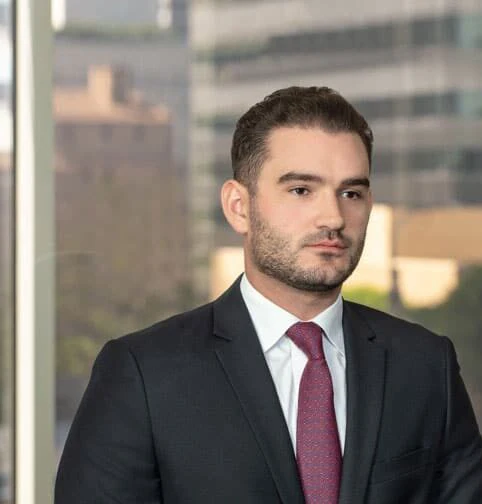
Mercer Legal Group is a California plaintiff-side employment shop — workers only, never the management side. Simon Moshkovich, the founding partner, trained on the defense side at Skadden and at Latham & Watkins and now runs that same playbook against the people on the other side of it. San Gabriel Valley sexual-harassment matters turn on intake detail, text and chat history, and the kind of witness work volume firms tend to skip. Baldwin Park-area clients stay with a senior attorney from the first call through the close of the file — no handoff to a paralegal once the retainer is in.
California’s workplace civil-rights statute, FEHA, recognizes two distinct forms of sexual harassment, and a Baldwin Park employer is bound by each. Quid pro quo is the first category. Anyone with control over your shift, your route, your commission, your station, or a chance at promotion ties that decision to sexual conduct. Agree and the schedule lands in your favor. Refuse and the hours dry up, the good route goes to someone else, or the close of the pay period suddenly turns rough. A single instance is enough to file on. The second category is hostile work environment. Unwanted comments, touching, staring, DMs, group-chat messages, or a pattern so persistent that a reasonable worker in your role cannot perform normally. The person doing it does not have to be management — a coworker on the line, a contractor in the yard, a vendor coming through the showroom, a regular customer all qualify — and the employer remains responsible for what it did about it. The conduct does not have to be obviously sexual either; harassment based on gender, pregnancy, sexual orientation, or gender identity sits inside the same statute. It does not have to take place on the property either — Slack, Teams, WhatsApp, Instagram DMs, Zoom, and after-shift parking-lot conversations all count. California likewise does not require a textbook complainant or a particular phrase on the exact day you wanted the conduct to stop. If you reported and the employer offered nothing of real substance — or worse, cut your hours, moved you to a harder station, wrote you up, or began the push toward a termination — the claim runs against the company itself, not only the individual who did it.
A sexual-harassment claim that lands against a Baldwin Park or San Gabriel Valley employer can recover the wages and benefits lost when the harassment, or the retaliation that came after, cost you hours, a shift, or the job entirely. Compensation for the emotional cost — usually the largest line on a verdict like this, because Los Angeles County juries understand what this conduct does to a person across months and years. Front pay applies when going back to that employer or that corner of the SGV industry is no longer realistic. Attorneys’ fees come from the employer under FEHA rather than out of the client’s recovery. Punitive damages are available when the conduct itself was severe enough, or when the company knew about it and chose to do nothing. The client owes nothing up front. Fees stay contingent on a recovery. Move on the file. California deadlines are short — one year on some claims, three for FEHA after AB 9 — and once the window closes the case goes cold on facts that were winnable last month. Company phones get replaced, the coworker willing to corroborate quits the warehouse and stops returning calls, the shift that could have spoken to the pattern gets reassigned. If a severance or separation agreement is in your hands carrying a non-disclosure or non-disparagement clause, do not sign before a lawyer reads it. The Silenced No More Act voids the portions of those NDAs that would block you from speaking about harassment, discrimination, or retaliation. The transaction the employer assumes is closing is not the only version of the deal available.
Confidential, no-cost case review for workers in Baldwin Park. A senior attorney walks the timeline with you, reads the claim the way the record actually supports, and prices the file against the current Los Angeles County pool.
Leverage on a Baldwin Park sexual-harassment file is built from the record, not from a tough-sounding demand letter. Step one is preservation. Every text, DM, Slack, Teams and WhatsApp thread, voicemail, email, screenshot, Snap save, and witness contact gets captured while the material is still recoverable and before anything on the company side quietly disappears. A litigation-hold letter goes to the employer so HR, IT, and the department head cannot wipe accounts, rotate devices, or rewrite the schedule board. On the worker’s side, specific guidance goes out on locking down a personal phone and on stopping the accidental flow of information into the employer’s own internal investigation. A charge with the California Civil Rights Department or the EEOC stops the deadlines that same week. Once discovery opens, requests target what an SGV employer least wants outside its walls — HR complaint files, prior complaints about the same manager or executive, exit interviews of workers who quit citing the same name, the investigation memo that reached the owner, and the decision-maker emails about how to deal with the worker filing now. Depositions follow. Under oath, the version HR wrote into the official file rarely survives being read alongside the manager’s own Slack and text history. When the record lines up that way, strong cases settle on strong terms. The matters that do not get prepared to land in front of a Los Angeles County jury.
Three things distinguish how this firm handles a Baldwin Park harassment file. Simon Moshkovich reads every intake himself — no intake coordinator, no keyword triage, no paralegal working off a form. The docket is held to a level that keeps senior-attorney hours on deposition prep and discovery instead of spread across a pipeline. The practice is workers-only — there is no San Gabriel Valley dealership, Irwindale distributor, Kaiser operations group, or local restaurant owner the firm is quietly holding back on because they pay on another matter. Together, those three are the kind of representation a worker wants on the other side of the table once a sophisticated employer brings in defense counsel of its own.
A brief selection of California employment matters the firm has carried to resolution. Each Baldwin Park-area or San Gabriel Valley case turned on its own record — prior outcomes carry no forecast of how a new claim will resolve.
A worker reported a sustained pattern of inappropriate conduct by a senior colleague. The internal complaints were documented but never acted on, and the worker was terminated under a pretextual performance write-up. The matter resolved at mediation with a confidential payment.
A mid-career professional was pressured by a direct supervisor in conduct documented across messaging platforms. Targeted discovery brought the records that drove the resolution to the surface, and the matter closed on confidential terms that included a full release of the non-disclosure provisions the employer had originally insisted on.
A senior worker at a Southern California logistics company was fired in the weeks after taking wage-and-hour concerns up through internal channels. The performance pretext the employer had on file did not survive its own HR documentation in discovery. The matter resolved confidentially in the seven figures, ahead of trial.
Phone the firm at (818) 538-3458 or submit the intake form on this page. Two or three sentences on what was said or done, who did it, when it was raised internally, and how the company responded — that is enough to set up the call. The full timeline comes out once the call is underway.
Simon or a senior attorney walks the timeline with you in full. The conversation covers what FEHA actually reaches in your facts, the categories of evidence that carry harassment matters to verdict, and what a Baldwin Park claim is realistically worth measured against the fact patterns the practice has already handled in the SGV and across Los Angeles County.
Once the firm takes the case, preservation starts that same day — every text, DM, voicemail, and witness contact gets captured — along with specific guidance on what to keep reporting, what to stop routing through internal HR channels, and how to respond if the employer or its counsel reaches out directly. CRD or EEOC filings go in the same week whenever the statute is short.
With the record built out, the call belongs to the worker — settle or take it to a jury. Baldwin Park harassment files resolve on serious numbers once the employer faces real exposure across documents and deposition testimony. The matters that go all the way to verdict are the files where the company refuses to acknowledge what the record already shows.
We act for employees across the San Gabriel Valley and the wider Los Angeles area. If your job is outside Baldwin Park, start here:
Confidential, no-cost review. Every Baldwin Park harassment intake reaches Simon Moshkovich personally before any retainer is signed.
We use cookies to run this site, measure traffic, and improve your experience. You can change this any time from the "Cookie preferences" link in the footer. See our Privacy Policy.