
In California, workplace harassment can include verbal comments, physical actions, visual materials, or repeated behavior that interferes with an employee’s ability to do their job. Employees have the right to work in a safe, respectful environment and can report harassment without fear of retaliation.
Workplace harassment can be confusing and emotionally draining, especially when it affects your day-to-day work life. At Mercer Legal Group, our experienced attorneys guide California employees through their rights and the steps to take when facing inappropriate conduct at work. We’ve helped clients navigate reporting, documentation, and legal action to protect their safety and careers. If you’re experiencing harassment, reach out today for a confidential consultation and let us help you take the next step.
In this blog, we will break down what legally counts as workplace harassment in California, including key definitions, common examples, and the rights employees have when facing inappropriate behavior at work.
What Is Workplace Harassment?

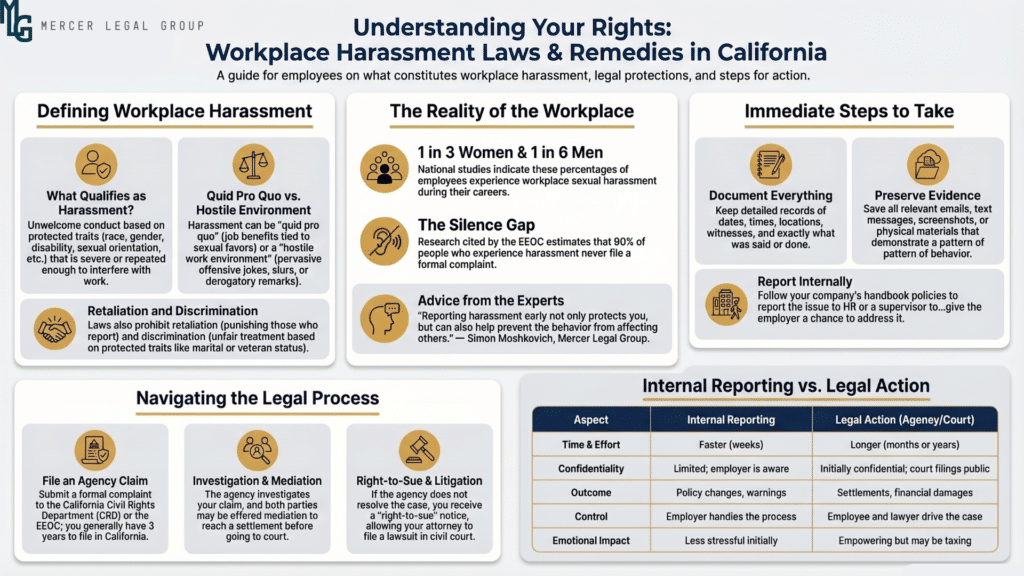
Workplace harassment is a serious issue that affects safety and dignity at work. Under California law and federal law, it is defined as unwelcome conduct based on protected characteristics such as gender identity and national origin. These include race, gender, religion, disability, or sexual orientation. The behavior must be severe or repeated enough to create a harmful work environment and may include verbal harassment.
There are different forms of workplace harassment. Quid pro quo is a common form of workplace harassment, where job benefits are contingent upon accepting unwanted conduct or requesting sexual favors. Another form is a hostile work environment, where repeated actions make work uncomfortable or unsafe and may include offensive jokes. This can include jokes, insults, or inappropriate comments such as derogatory remarks. Even non-physical actions can qualify as harassment and may be considered harassment.
“Reporting harassment early not only protects you, but can also help prevent the behavior from affecting others.” – Simon Moshkovich, Founding Partner, Mercer Legal Group
Closely related to harassment are retaliation and discrimination. Retaliation happens when someone is punished for reporting harassment or speaking up. Discrimination involves unfair treatment based on protected traits such as marital status or veteran status. These issues often overlap and can exist together in a workplace, which may constitute harassment. Employers are legally required to prevent and address all of them under state laws.
National studies have found that 1 in 3 women and about 1 in 6 men experience workplace sexual harassment during their careers, underscoring how common it can be, even if most cases go unreported. Understanding workplace harassment helps people recognize and respond to it early. It also empowers employees to know their rights and address harassing behavior.
A respectful workplace benefits everyone, not just those affected, and supports a professional setting. If something feels wrong, it is important to report it and seek support, especially when facing unlawful harassment.
How Do Laws Protect Employees From Workplace Harassment in California?
California’s workplace harassment laws aim to ensure the safety and respect of employees. The state offers strong legal rights and clear protection against unfair treatment under California law and guidance from the Equal Employment Opportunity Commission.
These laws apply to many workplaces and different types of employees, including non-supervisory employees. They make it illegal for employers to ignore or allow harassment to continue and may hold them liable when an employer fails to act.
One key law is theFair Employment and Housing Act. It protects workers from harassment based on protected traits like race, gender, or disability, including employees’ race and medical condition. It also requires employers to take steps to prevent and correct harassment and avoid illegal harassment. Another important law is the Civil Rights Act, which supports protection at the federal level and addresses sexual harassment. Together, these laws create a strong system of accountability.
These protections also cover related issues like retaliation and employment discrimination. Employees have the right to report problems without fear of punishment or public humiliation. Employers who fail to act can face serious legal consequences and be held responsible for severe misconduct. Knowing your rights helps you feel more confident and protected at work, even when dealing with bad behavior.
What Are the Steps to Take if Harassed in the Workplace?

Experiencing harassment at work can feel overwhelming, but taking clear, thoughtful steps can help you protect yourself and address unwelcome sexual advances or unwanted advances. Knowing how to document what’s happening and who to speak to, like a designated person, can make the process feel more manageable and put you back in control.
Recognize and acknowledge the behavior
Pay attention to conduct that feels inappropriate, unwelcome, or targeted, especially if it’s ongoing or involves unwanted touching. If something feels wrong, it’s worth taking seriously and may involve physical conduct.
Document everything carefully
Start keeping detailed records of each incident, including dates, times, locations, what was said or done, and any witnesses present. Strong documentation is a key part of evidence collection and can support your claim if you choose to report it, especially when dealing with spreading rumors or name-calling.
Save relevant evidence
Hold on to emails, text messages, screenshots, or any physical materials related to the harassment. These pieces of evidence can help show patterns of behavior and strengthen your case.
Review your company’s policies
Take a look at your employee handbook or workplace guidelines to understand the proper reporting procedures. This can help you follow the correct internal steps and know what to expect.
Report the issue internally
Research cited by the EEOC estimates that about 90% of people who experience workplace harassment never file a formal complaint, meaning reported cases may represent only a small portion of actual incidents. Bring your concerns to a supervisor, HR representative, or designated reporting channel within your organization. Internal reporting alerts your employer and allows them to address the situation.
Seek support and guidance
Talk to someone you trust, whether it’s a colleague, mentor, or legal professional, to help you process what’s happening and understand your options. You don’t have to handle the situation alone, and getting advice can make a big difference.
How Do You Pursue Legal Action for workplace harassment?
Taking legal action for workplace harassment might feel intimidating, but understanding the process can make it much more approachable. From filing a claim to potentially reaching a settlement or going to court, each step is designed to help you seek accountability and protect your rights.
- File an official complaint with the appropriate agency
The first step is usually filing a claim with a government agency like the California Civil Rights Department (CRD) or the EEOC. This formally documents your experience and may involve issues like unwelcome sexual advances or sexual advances and is often required before you can move forward with a lawsuit. - Participate in the investigation process
After you file your claim, the agency may conduct an investigation by reviewing documents, interviewing witnesses, and gathering evidence. Your documentation and records will play an important role in supporting your case during this stage, especially when showing patterns beyond isolated incidents. - Explore mediation or early resolution options
In some cases, both parties may be offered mediation as a way to resolve the issue without going to court. This can lead to a settlement, where both sides agree on a resolution, often addressing offensive work environment concerns and saving time and emotional stress. - Receive a “right-to-sue” notice
If the agency does not resolve the case or you choose to proceed further, you may be issued a right-to-sue letter. This gives you the legal permission to file a lawsuit in civil court with help from an employment attorney or employment lawyer. - File a lawsuit in court
With the right-to-sue notice, you can formally begin court proceedings against your employer or the responsible party. This step typically involves working with an attorney to present your case and address actions like physical intimidation or inappropriate gestures while seeking damages. - Engage in settlement discussions or trial
Many workplace harassment cases are resolved through a settlement before reaching trial, where both sides agree on compensation or other remedies that address derogatory comments or racial slurs. If no agreement is reached, the case may proceed to court, where a judge or jury will determine the outcome.
Internal Reporting vs. Legal Action in Workplace Harassment Cases
When facing harassment at work, it can be tough to know what step to take first. Should you report it internally to HR, or is it time to involve a lawyer and take legal action for issues like sexual favors or exposure to explicit images? Each option has its own benefits, challenges, and potential outcomes. To make it easier, here’s a simple comparison showing the key differences between reporting internally and pursuing legal action.
| Aspect | Internal Reporting (HR/Supervisor) | Legal Action (Agency or Court) | Tradeoff/Consideration |
|---|---|---|---|
| Time & Effort | Often faster; can be resolved internally in weeks | Longer process: investigations and lawsuits can take months or years | Internal reporting is quicker but may not result in compensation; legal action takes longer but can secure stronger outcomes |
| Confidentiality | May be limited; employer is aware | Typically confidential with the agency; court filings may become public | Legal action may feel more protected initially, but lawsuits can be public |
| Outcome/Remedy | Policy changes, warnings, mediation | Settlements, financial damages, court orders | Internal reporting focuses on workplace improvement; legal action can provide monetary compensation and accountability |
| Control Over Process | Employee has limited control; employer handles the process | Employee (with lawyer) actively drives the case | Internal reporting relies on employer compliance; legal action gives more leverage and legal rights |
| Emotional Impact | Less stressful initially; familiar environment | Can be stressful due to litigation | Internal reporting is psychologically easier; legal action is empowering but may be emotionally taxing |
What Are the Challenges in Proving Harassment?
Proving workplace harassment can be difficult for many people. One major challenge is the burden of proof, which requires clear and convincing evidence. Many cases rely on personal accounts rather than physical proof, such as offensive objects. Such situations can make victims feel unsure or discouraged.
Another common issue is the lack of witnesses. Harassment often happens in private, making it a “he-said-she-said” situation. In these cases, credibility becomes crucial, especially when actions are considered harassment. Small details, consistency, and past behavior can influence how a claim is viewed.
There are ways to handle these challenges more effectively. Keeping records of incidents, messages, or dates can help build a stronger case, especially when documenting other protected characteristic issues. Reporting early and speaking to trusted authorities, who may train supervisors, also makes a difference. With the right steps, it becomes easier to support your claim and seek justice.
Why Is Legal Representation Important in Workplace Harassment Claims?

Legal representation plays a key role in workplace harassment claims. Having a lawyer provides you proper legal advice and strong representation from the start, especially in cases involving sexual harassment. Many people do not fully understand their rights or options. A lawyer helps you see the full picture and take the right steps, particularly when addressing gender expression concerns.
We always remind our clients, “Legal guidance can turn a confusing situation into a clear path forward.” One major benefit of legal representation is expert guidance throughout the process. Workplace harassment lawyers know how to gather evidence, meet deadlines, and build a solid case. They also handle complex procedures and communicate with employers on your behalf. This reduces stress and helps you stay focused while your case is handled properly.
Legal representation also increases your chance of success. Lawyers can negotiate better outcomes and even secure compensation where possible. Their experience helps them present strong arguments and avoid costly mistakes. With the right support, you feel more confident and protected every step of the way.
For example, Maria, a marketing coordinator in California, experienced ongoing inappropriate remarks from her supervisor and began documenting each incident. After reporting it internally with little response, she contacted an employment attorney for guidance. With legal support, she filed a formal complaint, leading to a settlement that included compensation and workplace policy changes. In the end, she felt empowered for taking steps to protect herself.
What Are Possible Outcomes and Compensation for Workplace Harassment in California?
Workplace harassment cases in California can end in different ways. The outcome often depends on the strength of the evidence and the response of the employer. Some cases are resolved quickly, while others take more time. The goal is to ensure fair compensation and a safer workplace.
One common outcome is a settlement. This happens when both sides agree to resolve the issue without going to court. Settlements may include financial damages for emotional distress or lost income. They can also include agreements to change workplace behavior. This option is often faster and less stressful.
Another outcome is a court award. If a case goes to trial, a judge or jury may decide the result. Court awards can provide higher compensation depending on the harm caused. This may cover lost wages, legal fees, and emotional impact. It also sends a strong message to employers.
Harassment cases can also lead to policy changes. Employers may update rules, provide training, or discipline those involved. These changes help prevent future issues and improve workplace culture. In the end, these outcomes aim to protect employees and promote fairness.
What Are the Next Steps for Victims of Workplace Harassment in California?
Experiencing workplace harassment can feel overwhelming, but taking the right steps can help. The first thing to do is pause and protect your well-being. Write down what happened while it is still fresh in your mind. Keep records of dates, messages, and any witnesses.
Next, seek support from people you trust. This can include friends, family, or workplace support groups. You can also consider professional counseling to help process your emotions. Talking to someone helps you feel less alone and more grounded. Support makes it easier to decide your next move.
It is also important to consider legal consultation. Speaking with a lawyer helps you understand your rights and options. They can guide you on how to report the issue properly. Early advice can make a big difference in how your case develops.
Finally, focus on follow-up and staying consistent. Report the harassment through the proper workplace channels if you feel safe to do so. Keep copies of all reports and responses from your employer. Staying organized and persistent helps protect you and strengthens your case.
Ready to Challenge Workplace Harassment in California?
Understanding workplace harassment in California is critical to creating a safe and respectful work environment. From recognizing various forms of harassment to knowing your rights and responsibilities, staying informed is the first step toward prevention and resolution.
Are you unsure whether the behavior you’re experiencing at work counts as harassment? At Mercer Legal Group, we help California employees understand their rights and take action when faced with inappropriate or unlawful conduct. From documenting incidents to exploring legal options, our team of experienced workplace harassment attorneys in California is here to support you every step of the way. Contact us today for a confidential, free consultation and get the guidance you deserve.
Frequently Asked Questions
This section answers some of the most frequently asked questions about what is considered workplace harassment in California. It breaks things down in a simple way so you can understand your rights and what to look out for.
What Behaviors Are Considered Workplace Harassment in California?
Workplace harassment includes unwanted conduct based on protected traits like race, gender, or religion. This can involve offensive comments, jokes, threats, or repeated actions that create a hostile environment.
How Can I Report Workplace Harassment in California?
You can report harassment to your employer through HR or a supervisor using formal complaint channels. You may also file a complaint with the California Civil Rights Department if the issue is not resolved internally.
Can an Employer Be Held Liable for Workplace Harassment in California?
Yes, employers can be held responsible if they fail to prevent or address harassment in the workplace. They are required to take reasonable steps to protect employees once they are aware of the issue.
How Long Do I Have to File a Workplace Harassment Claim in California?
In most cases, you have up to three years to file a complaint with the appropriate state agency. Acting early is important to preserve evidence and strengthen your claim.
What Protections Do Employees Have Against Workplace Harassment in California?
Employees are protected under laws like the Fair Employment and Housing Act, which prohibits harassment and retaliation. These protections ensure you can report issues without fear of punishment or unfair treatment.
Disclaimer: The information provided on this blog is for general informational purposes only and does not constitute legal advice. Reading this content does not create an attorney-client relationship. Laws and regulations vary by jurisdiction and may change over time, so you should consult a qualified workplace harassment attorney directly for advice regarding your specific situation. Past examples, case studies, or hypothetical scenarios are illustrative only and do not guarantee similar results.