



Fired, demoted, pushed out, or pressured to resign by a San Diego employer? Mercer Legal Group is headquartered in Los Angeles, California and represents San Diego workers in wrongful termination, retaliation, discrimination, harassment, and FMLA/CFRA claims under California Labor Code, FEHA, and federal employment statutes. Free, confidential case review. SE HABLA ESPAÑOL.
NYU Law & NYU Stern · Skadden & Latham alumni · No-charge consultation · Employment law only · Available 24 hours a day, 7 days a week.
Or call us directly
A San Diego employee who was fired in violation of public policy — for asserting workplace rights, refusing to do something illegal, raising a discrimination or harassment complaint, taking protected medical or family leave, or reporting a Labor Code violation — has rights under California law, and stronger ones than the federal floor. The hard part is knowing whether what happened to you is actually actionable, what evidence to preserve, and which deadlines are running. That is where a wrongful-termination lawyer matters. Contact our San Diego wrongful-termination lawyers today for a free consultation.
Mercer Legal Group is a California employment law firm that represents workers and only workers — never employers. The firm is headquartered in Los Angeles, California and serves San Diego and the surrounding San Diego County, including La Jolla, Carmel Valley, Mira Mesa, Mission Valley, Pacific Beach, Chula Vista, Oceanside, Escondido, El Cajon, and Coronado. Every San Diego intake lands on a senior attorney’s desk for an honest read, not a paralegal screen.
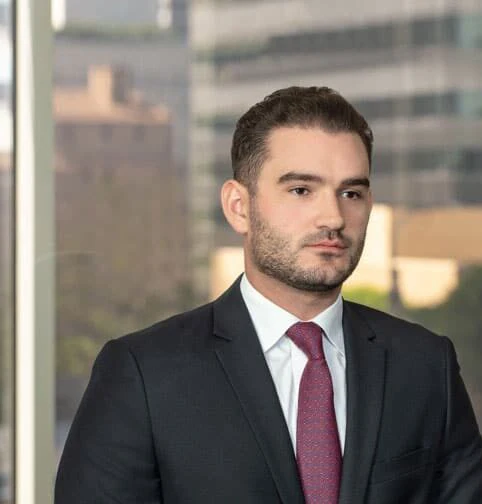
San Diego workplaces span the full range of California employment risk — biotech and pharma in Torrey Pines and Sorrento Valley (Pfizer, Illumina, Thermo Fisher, Eli Lilly, Takeda), tech in Sorrento Mesa (Qualcomm), healthcare across Sharp HealthCare, Scripps Health, UC San Diego Health, and Kaiser Permanente facilities, hospitality and tourism along Mission Bay and the Gaslamp Quarter, and a strong corporate presence across finance, professional services, and corporate offices downtown. The most common San Diego wrongful-termination cases we see fall into a small number of patterns: firing after a discrimination or harassment complaint, termination for refusing to participate in illegal conduct, firing tied to FMLA/CFRA medical or family leave, retaliation for asserting wage or safety rights, and constructive discharge from hostile work conditions.
California’s protections run deeper than the federal floor. The Fair Employment and Housing Act (FEHA, Government Code §12940 et seq.) covers more protected categories and more employer sizes than Title VII. Labor Code §1102.5 protects whistleblowers who report violations internally to a supervisor or manager, not only to government agencies. Labor Code §98.6 prohibits retaliation for asserting any Labor Code right. The Tameny common-law wrongful-termination claim (Tameny v. Atlantic Richfield Co. (1980) 27 Cal.3d 167) applies when the firing was tied to a fundamental public policy.
A lawyer who works California employment cases daily knows the San Diego County Superior Court Hall of Justice where wrongful-termination matters are filed, the local mediators who handle these cases, and the negotiation patterns of HR teams at the dominant local employers across biotech, tech, healthcare, and defense. If you are unsure whether what happened to you crosses the line, a brief, no-cost call usually answers the threshold question — see our writeup on do I need an employment lawyer for a longer framework.
Mercer Legal Group takes San Diego County cases wherever the job was, Chula Vista, Escondido, Oceanside, Carlsbad, Encinitas, El Cajon, Poway, La Jolla and Carmel Valley included. A FEHA claim is filed with the California Civil Rights Department and a civil suit is filed in San Diego Superior Court, whichever city in the county you worked in.
The case types below cover the bulk of what San Diego workers come to us about. Each one has its own evidence pattern and its own damages model. The right cause of action is the one the facts can be supported at trial.
Discrimination-based wrongful termination in a San Diego workplace means an employer fired you because of a protected characteristic — race, gender, age, disability, pregnancy, religion, national origin, sexual orientation, or gender identity. The conduct can be a single material event (a firing, a demotion, a denied promotion) or a pattern over time. California FEHA applies to employers with 5 or more employees — broader than federal Title VII, which requires 15.
Proving discrimination is usually circumstantial. There is rarely a smoking-gun email. Instead, the case is built on the timeline, comparator-employee records, the personnel file, and inconsistencies in the employer’s stated reasons. We walk through the standard framework in our guide on how to prove employment discrimination in California.
Harassment in a San Diego workplace can be quid pro quo (a supervisor conditioning a job benefit on a sexual demand) or hostile work environment (unwelcome conduct severe or pervasive enough to alter working conditions). California FEHA covers harassment by supervisors, co-workers, and even third parties such as customers, clients, or vendors. SB 331 (Silenced No More Act, 2022) voids NDA provisions that try to silence harassment claims, so a prior NDA does not necessarily bar your case.
When the harassment escalates to termination — either the harasser is your firer, or the workplace becomes so intolerable that a reasonable person would feel compelled to resign (constructive discharge) — the case includes both the underlying harassment claim and a wrongful-termination claim. Our writeup on how a lawyer helps victims of workplace sexual harassment covers the typical evidence and damages framework.
The same claim often goes by more than one name. Constructive discharge is frequently searched as constructive termination, and being pushed out without cause is often called unlawful termination. California applies the same legal test whichever phrase you use. Where a termination overlaps another claim, the firm also handles Family and Medical Leave Act and CFRA leave violations, whistleblower protection, retaliation claims, and severance agreement review if you have been handed an agreement to sign.
Free case review for San Diego workers. Honest read on whether the claim has a real path to recovery — not a sales pitch.
Our work for a San Diego wrongful-termination client breaks into four phases. The phases overlap in practice, but they are useful as a map.
California Labor Code §510 requires time-and-a-half for non-exempt employees working more than 8 hours in a day or 40 in a week, and double time past 12 hours in a day. Common San Diego employer violations include misclassifying employees as exempt, treating non-exempt workers as 1099 contractors, requiring off-the-clock work before or after a shift, and capping reported hours to avoid overtime. When an employer retaliates against a worker who raises an OT issue, both a wage claim and a wrongful-termination claim can be brought — see our writeup on how lawyers for overtime help employees fight for fair compensation.
Most plaintiff-side employment firms are built for volume — hundreds of open cases, rotating attorneys, intake forms that screen 90% of callers out. This is not that. Mercer Legal Group runs a senior-attention model for San Diego workers, anchored to the patterns that recur in SD biotech (Torrey Pines and Sorrento Valley), healthcare (Sharp, Scripps, UCSD Health, Kaiser), and downtown finance and professional services: termination after raising FDA-compliance or safety concerns, hostile work environments tied to research-team or patient-care dynamics, and contract or equity disputes after acquisitions and reorganizations. Here is what the process actually looks like.
Most San Diego wrongful-termination cases are taken on a contingency-fee basis: the firm only recovers if you recover. Typical California employment contingency fees range from one-third to 40% of the gross recovery, depending on the stage at which the case resolves. Out-of-pocket costs (filing fees, deposition costs, expert fees) are usually advanced by the firm and reimbursed from the recovery. Hourly billing is less common in plaintiff-side employment work but is used in some discrete matters such as severance review or non-compete enforcement defense. For a longer breakdown of cost structures and ranges, see our guide on how much does a discrimination lawyer cost in California.
Different wrongful-termination claims have different proof standards, damages, and timelines. The table below is a high-level San Diego reference — every case turns on its specific facts.
| Claim Type | Description | Potential Remedies | Typical Timeline |
|---|---|---|---|
| Tameny Wrongful Termination | Firing in violation of a fundamental California public policy (Tameny v. Atlantic Richfield (1980) 27 Cal.3d 167) | Back pay, front pay, emotional distress, punitive damages (Civ Code §3294), attorney’s fees | 12–30 months |
| Discrimination | Adverse treatment based on a protected category (race, gender, age, disability, pregnancy, etc.) under FEHA §12940 | Back pay, front pay, emotional distress, attorney’s fees, punitive damages | 9–24 months |
| Harassment | Hostile work environment or quid pro quo harassment; sexual or based on protected category | Back pay, emotional distress, punitive damages; injunctive relief | 9–24 months |
| Retaliation | Adverse action for protected activity (Labor Code §1102.5, §98.6, FEHA §12940(h)) — see our writeup on the legal ramifications of EEOC retaliation claims | Back pay, front pay, $10,000 civil penalty per violation, attorney’s fees | 9–24 months |
| FMLA / CFRA Violations | Denied leave, retaliation for taking leave, failure to reinstate | Back pay, front pay, reinstatement, liquidated damages, attorney’s fees | 9–18 months |
The bulk of California plaintiff-side wrongful-termination work falls into five buckets: Tameny common-law wrongful termination in violation of public policy (Tameny v. Atlantic Richfield (1980) 27 Cal.3d 167); discrimination-driven terminations under FEHA (Gov Code §12940) covering race, gender, age, disability, pregnancy, religion, national origin, sexual orientation, and gender identity; harassment-driven terminations including constructive discharge from hostile work conditions; retaliation under Labor Code §1102.5 and §98.6 for asserting workplace rights; and FMLA/CFRA leave violations including denied leave, denied reinstatement, and retaliation for taking protected leave. We take all of these for San Diego workers. Most cases plead two or three of these in the alternative.
Most California wrongful-termination cases resolve in 9–24 months. The FEHA administrative exhaustion step (filing with the California Civil Rights Department, then obtaining a right-to-sue notice) typically takes 1–4 months. Pre-litigation settlement, when it works, can close a case in 3–6 months total. Cases that go through full discovery and mediation usually run 12–18 months. Cases tried to verdict run 18–36 months. San Diego County Superior Court (Hall of Justice) and the federal Southern District (Edward J. Schwartz Courthouse) track close to the California average, with mediation programs in both that resolve a meaningful share of cases before trial.
Yes. California is an at-will employment state, but at-will termination does not authorize firing in violation of public policy. The Tameny common-law claim (Tameny v. Atlantic Richfield Co. (1980) 27 Cal.3d 167) is available when the firing was tied to a fundamental California public policy — refusing to commit an illegal act, reporting a legal violation, asserting a Labor Code right, or based on a FEHA protected category. Most San Diego wrongful-termination cases are public-policy claims with damages that include back pay, front pay, emotional distress under Tameny, and (where the conduct was malicious or oppressive) punitive damages under Civil Code §3294. The first step is an honest read on whether the facts support a viable claim.
The case is built on the documentary record. The strongest cases combine: the original complaint or protected activity (emails, HR portal entries, text messages, meeting notes that establish what you raised and when); the timing between the complaint and the firing (temporal proximity is California courts’ standard circumstantial evidence of causation); the personnel file you have a statutory right to under Labor Code §1198.5; comparator-employee records showing how the employer treated workers who did not complain; performance reviews and disciplinary history showing what changed; witness statements from co-workers; and the employer’s stated reason for the firing tested against the documentary record. A “performance” or “restructuring” rationale that appears only after the protected activity is the pattern pretext is built from.
Most plaintiff-side California wrongful-termination lawyers work on a contingency-fee basis — no fee unless we recover. Typical contingency rates range from one-third to 40% of the gross recovery depending on the stage at which the case resolves. Out-of-pocket costs (court filing fees, deposition costs, expert witness fees) are usually advanced by the firm and reimbursed from the recovery. Hourly billing is less common in plaintiff-side wrongful-termination work but is used for discrete matters such as severance review or non-compete defense. Initial consultations are free. For a longer breakdown see our guide on how much does a discrimination lawyer cost in California.
Call or send a note through the contact form. Two or three sentences on what happened and roughly when is enough to schedule the call.
Simon or a senior attorney works the facts on the call and gives a direct read: viable claim, weak claim, or no claim. No pitch. If the case has merit, the attorney lays out the likely framework — causes of action, evidence to preserve, and damages model.
If the case has merit, the firm tells you exactly what to preserve — email threads, text messages, performance reviews, pay records, witness contact info, the personnel file you have a statutory right to under Labor Code §1198.5 — and what NOT to send or post.
Once the record is built, the choice is yours: accept the best settlement the file will support, or push the case to trial. We share the analysis behind both paths and let you make the call.
Free, confidential review. Every San Diego intake lands on a senior attorney’s desk for an honest read on whether the claim has a real path. SE HABLA ESPAÑOL.
Legal Disclaimer: The information on this page is provided for general informational purposes only and does not constitute legal advice. Reading this page, contacting the firm, or sending information through the case-evaluation form does not create an attorney-client relationship. Every employment case turns on its specific facts, and outcomes vary. Past results do not guarantee future outcomes. Mercer Legal Group is a California-licensed law firm; this site is not intended as solicitation in jurisdictions where the firm is not licensed. To discuss your specific situation, schedule a free confidential consultation.
Responsible attorney: Simon Moshkovich, California State Bar No. 323584. Mercer Legal Group, 21031 Ventura Blvd., Suite 103, Woodland Hills, CA 91364.
Read more about how the firm helps San Diego workers: San Diego employment lawyer.
We use cookies to run this site, measure traffic, and improve your experience. You can change this any time from the "Cookie preferences" link in the footer. See our Privacy Policy.