As a pregnant employee in California you have rights. You can request reasonable accommodations to your role, you cannot be discriminated against because you are pregnant and you can have up to 4 months of protected Pregnancy Disability Leave (PDL). While many parents take 12 weeks of bonding leave you may be able to be compensated for some of your income via State schemes.
We have lots of experience helping employees understand their rights and fighting to ensure their rights are kept. If you have had issues with your employer not making reasonable accommodations or have been treated differently because you have told them you are pregnant we can help. We offer free initial consultations.
In this article we will explain reasonable accommodations, what Pregnancy Disability Leave is, how long you can take it for and when your CFRA bonding leave will start. We will also explain what you can earn while on leave and what to do if your employer is breaching any rules.
Pregnant Employee Rights in California
You cannot be discriminated against because you are pregnant, have given birth or have a medical condition as a result of your pregnancy. If you work for an employer with 15+ employees you will be protected under Title VII of Federal Law, Pregnancy Discrimination Act and the Pregnant Workers Fairness Act (PWFA). From 27th June 2023 your employer must make reasonable accommodations for any known limitations you have.
All employees in California are protected under Harassment laws. You cannot be harassed by your employer because you are pregnant. This includes making offensive comments, intimidation and anything similar. This includes severe morning sickness, gestational diabetes, complications following birth, loss of pregnancy and post natal conditions. It also includes if you have had children previously or are able to get pregnant. Immigration status is irrelevant.
Once you return to work your employer must allow you sufficient time to breast feed. Reasonable accommodations include:
Reasonable Accommodations while Pregnant
You can request reasonable accommodations while pregnant including:
- Your role, hours and conditions.
This will depend on what medical condition you have and what your role is. If you cannot stand for your whole shift you can request a chair/stool. Many people request extra breaks, longer toilet breaks, less heavy work and no heavy lifting. If you have a role where you are exposed to harmful chemicals and/or physical work you can request to be moved to a role that is less hazardous and less physical. This will require a doctor’s note and there must be a role available. You can request flexible hours to attend your prenatal appointments. If your medical condition allows you can request to work from home.
Once you request reasonable accommodations your employer must undertake the interactive process. This is a quick and genuine process. They will have a conversation with you about your limitations, what you role entails and what options are available. They cannot simply state that they cannot make reasonable accommodations. They must make an effort to make reasonable accommodations. The only reason they can legally say they cannot make a specific reasonable accommodation is if it causes undue hardship.
Your employer may ask for you to provide reasonable medical evidence to show you have limitations. We recommend writing a letter requesting reasonable accommodations. Keep a copy of your doctor’s note. Keep a copy of any letters you received from the company. This can be useful if your employer is not willing to discuss any options, remove your duties or put pressure on you to go on leave when a simple accommodation can be made.
Pregnancy Disability Leave in California
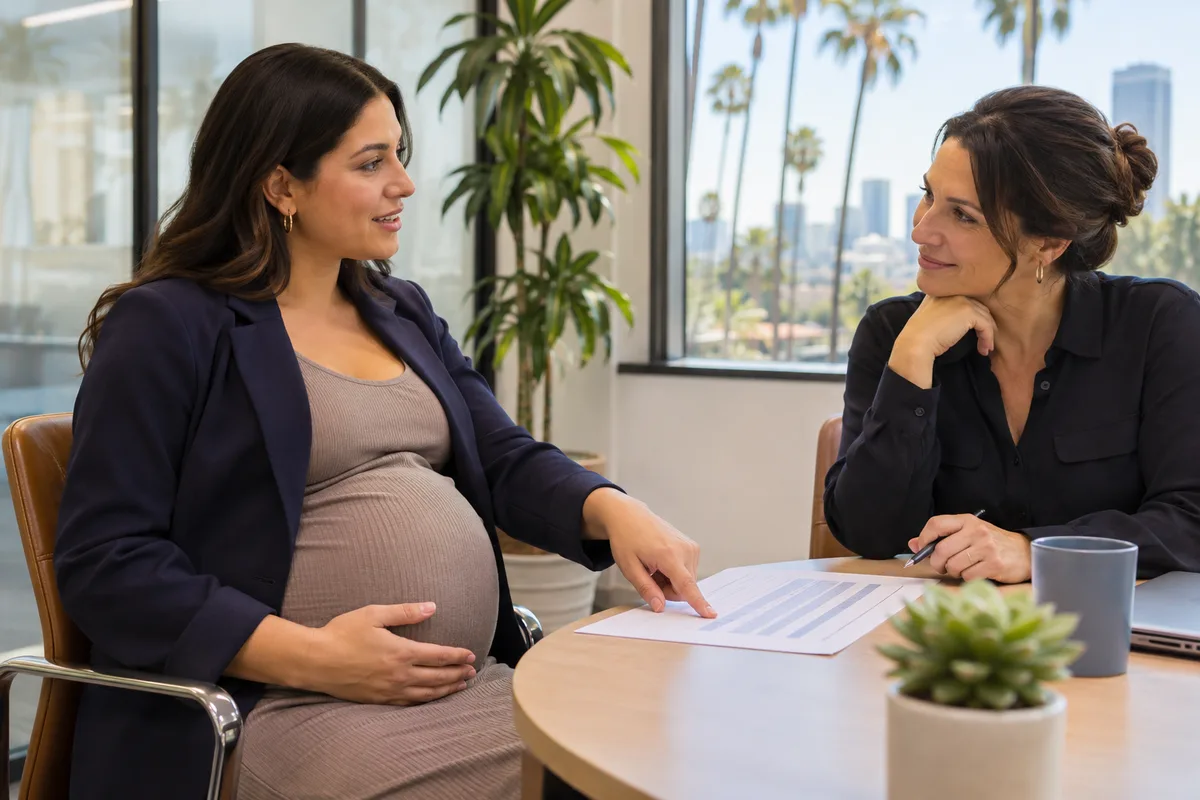
Pregnancy Disability Leave is when you take leave because you are pregnant, have given birth or have a medical issue. If you work for an employer with 5+ employees you can take up to 4 months of protected leave. There is no minimum hours or time you have worked so even if you have only started working last month and are on a part time role you are entitled.
This should not be viewed as maternity leave. It is leave due to your disability. This includes severe morning sickness, pregnancy induced hypertension, attending prenatal appointments, bed rest, giving birth & recovery and post natal depression. You can take this leave in chunks and/or reduced hours. It can be beneficial if you regularly attend your doctor’s appointments or have bad days. Your employer may ask for medical evidence to show you need this leave and how long. If you know when you are due or approximately when you will start please give reasonable notice. If it is an emergency please let them know as soon as possible.
You will generally be reinstated. We recommend asking them when you will return. In some cases they may offer you a similar role. This should be a role with similar responsibilities, skills, benefits and salary. Your employer may generally pay for your group health insurance so will need to pay this for up to 4 months.
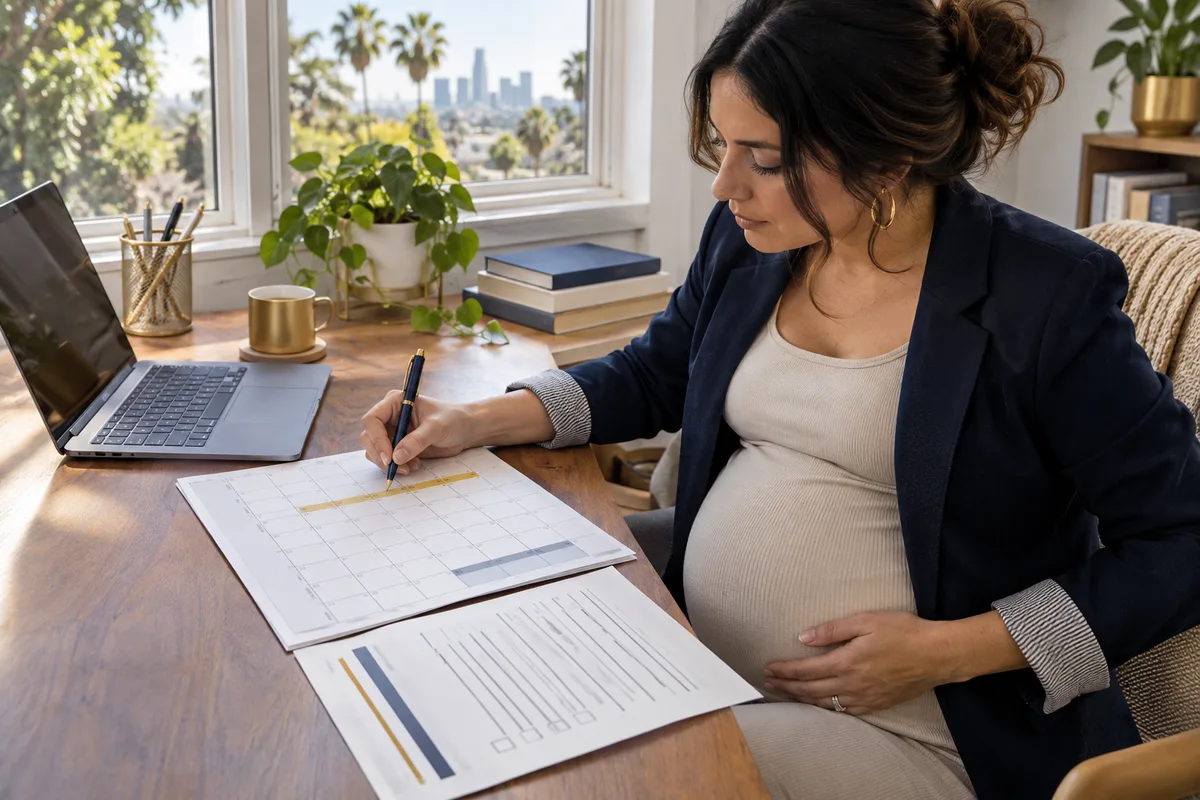
Can my employer fire me because I’m pregnant in California?
No. Your employer cannot refuse to employ you or demote you. They cannot discriminate against you by reducing your hours, not promoting you, giving you more challenging work or not offering you opportunities because you are pregnant. They cannot assume you are not as committed or capable.
They cannot put you on leave. If there are reasonable accommodations to make they must consider this. If you are protected under the PWFA and there are other reasonable options to allow you to work they cannot put you on leave (EEOC).
You cannot be disciplined for requesting reasonable accommodations, taking PDL, complaining about discrimination or assisting with investigations. If you are being disciplined by reducing your pay, changing your duties, giving you a series of bad reviews or firing you please be aware. If you have been laid off while on protected leave or shortly after please see our guide on being fired on disability leave in California.
Pregnancy Disability Leave vs Maternity Leave
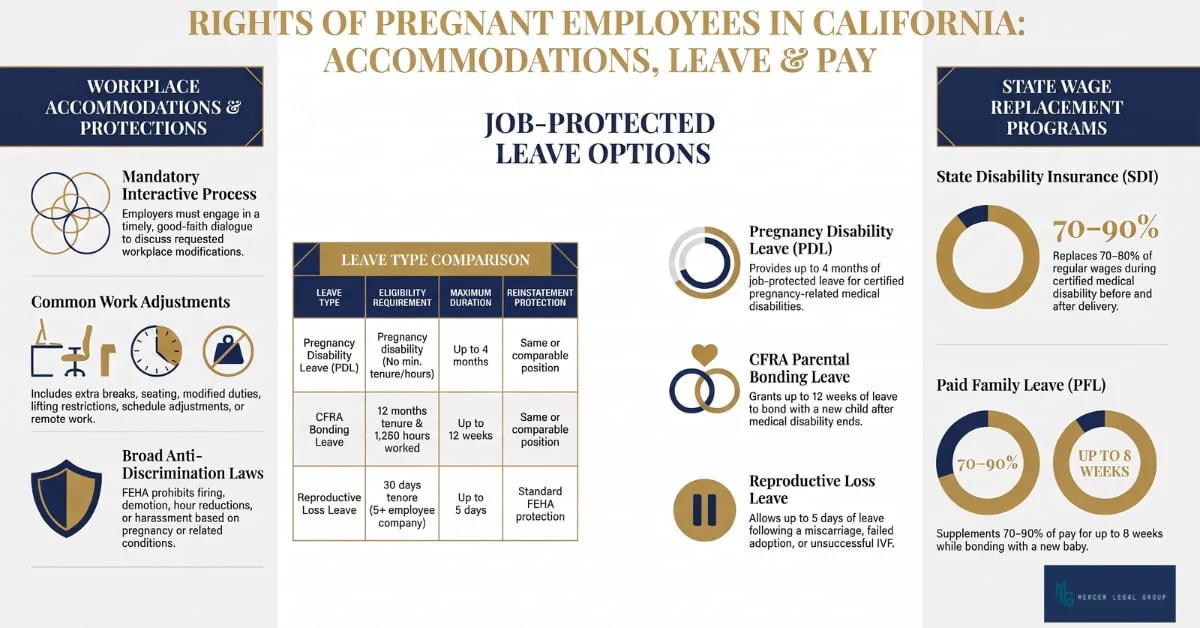
There is no maternity leave in California. There are two types of leave. Pregnancy Disability Leave is for when you cannot work due to your pregnancy related issues. CFRA bonding leave is for eligible employees to care for their newborn. Below is a comparison.
Comparison | Pregnancy Disability Leave (PDL) | CFRA Parental Bonding Leave |
Purpose | Leave due to pregnancy, childbirth or related medical issues. | To spend time with your new family member after giving birth, adoption or placement. |
Covered by | Employers with 5+ employees. | Employers with 5+ employees. |
Eligibility | Pregnancy related disability. No minimum hours/length of time worked. | Minimum 12 months with the employer and 1,250 hours in last 12 months. |
Length of Leave | Up to 4 months per pregnancy. Length depends on usual hours and length of disability. | Up to 12 weeks in 1 year. |
When can you take it? | Pre/post childbirth. If medically necessary. | Post childbirth/adoption/placement. |
Can you take it in chunks? | Yes. You can take all, in chunks or reduced hours if medically necessary. | Yes. You can take in chunks of 2 weeks+. Must allow for shorter periods twice. |
Protection | Reinstated in same/similar role. | Reinstated in same/similar role. |
Pay | Not paid. May be eligible for State Disability Insurance. | Not paid. May be eligible for Paid Family Leave. |
Can I take both?
Yes. If eligible you will take your PDL. Once you have finished your disability you will take your CFRA bonding leave. If you have 10 weeks of PDL certified by your doctor around the time of your delivery you can take up to 12 weeks leave for your baby.
These are two different leaves. PDL is for you and CFRA bonding leave is for your child. However you can take PDL alongside FMLA (Federal leave). If you are eligible you can take PDL alongside FMLA. Please see our FMLA and CFRA leave page.
Reproductive Loss Leave
There are specific rules for if you lose your pregnancy. If you have had a miscarriage, stillbirth, unsuccessful adoption/surrogate or unsuccessful Assisted Reproduction (e.g embryo transfer did not work) you can take up to 5 days leave. This is for private employers with 5+ employees and public employers of any size. You must have worked for them for a minimum of 30 days. You can take this leave in chunks but must take it within 3 months of your loss. This is not related to PDL or CFRA. If you want to be paid for this leave your employer must allow you to take any vacation, sick days or PTO you have. For full details please see the Civil Rights Department’s reproductive loss leave factsheet.
Paid Leave for Pregnant Employees in California
While on PDL and CFRA your job is protected but you will not be paid. This will be covered by another source such as State Disability Insurance, Paid Family Leave, holiday/leave.
California State Disability Insurance (SDI)
SDI will pay you a percentage of your pay if you cannot work due to a pregnancy related disability. This must be certified by a healthcare professional. You will generally not be able to work around 4 weeks before your due date and 6 weeks after a vaginal delivery or 8 weeks after a c-section. This can be longer if there are complications.
If you start your claim in 2026 you will receive around 70-90% of your previous earnings. This will be capped at a maximum of $1,765 per week depending on your earnings. You must have earned a minimum of $300 with SDI deductions in your base period, lost wages and medical certificate.
Paid Family Leave (PFL)
Once you have finished your disability you can take PFL. This will pay you a percentage of your pay while bonding with your child. You will be entitled to up to 8 weeks of benefits in a 12 month period. This will be 70-90% of your previous earnings and capped at $1,765 per week (2026). You must have earned a minimum of $300.
You will not be protected for your job. Your job will be protected under CFRA. PFL will help compensate you for some of your income. Many new parents take this.
Other Paid Leave & Accrued Leave
If other employees are able to take paid leave for a temporary disability you must be allowed to take leave for your PDL. You may be able to take accrued leave.
If there is any unpaid leave in your PDL your employer may ask you to take accrued sick leave. They cannot ask you to take any vacation/PTO. If you wish you can. If you are taking CFRA your employer may ask you to take any vacation/PTO during your unpaid bonding leave. If you wish to take any sick leave during your bonding you will need your employer’s agreement.
If you are claiming SDI/PFL during these weeks this will not be considered unpaid leave. Your employer cannot ask you to take any vacation, sick leave or PTO. Since 1st January 2025 your employer cannot ask you to take any paid leave before you start receiving your PFL. However if you wish you can take some paid leave to increase your benefits.
What should I do if my employer is breaching my pregnancy rights?
If you feel your employer has gone too far follow the steps below to make a claim.
- Document. Try to write down what happened, when, who and how it affected you. This could be you not being given reasonable accommodations, reduction in hours, unfair discipline or comments about your pregnancy.
- Evidence. Save any emails, texts, reasonable accommodation requests, doctors note, performance reviews or anything your boss has written. Only save what you are legally entitled to and do not save any confidential information.
- Complaint. By emailing HR/manager you will have evidence you have made a complaint and when. You do not need to go through all the processes with the company before contacting a state agency.
- Civil Rights Department (CRD). They investigate any breaches of FEHA. This includes pregnancy discrimination, harassment and retaliation. Usually you have 3 years from the last act of discrimination to complete an intake form. If you wish to go straight to court you can request an immediate right to sue notice.
- EEOC. If your employer has breached the Pregnancy Discrimination Act or PWFA you can make a federal claim. Generally in California you have 300 days from the date of the breach.
You may have a case of retaliation.
When should I contact a pregnancy discrimination lawyer in California?
If your employer is refusing to make reasonable accommodations to your role (despite your doctor stating you have limitations), reducing your hours, pressuring you to go on unnecessary leave or refusing to give your job back after your PDL. Or if they are firing you after you told them you were pregnant. You do not need to lose your job to start putting things in place.
A lawyer can look through your emails, medical evidence, reasonable accommodation requests and complaints to see if you have a case. This may include pregnancy discrimination, failure to make reasonable accommodations, retaliation or interference with your protected leave. The earlier you contact someone the better to ensure you meet the deadlines for CRD/EEOC.
Need to contact an employment lawyer?
No one should have to choose between having a healthy pregnancy and keeping your job. Mercer Legal Group can help California employees with pregnancy discrimination, reasonable accommodations and leave issues. Contact us today for a free initial consultation.
Pregnant Employee Rights FAQ’s - California
Below are the most common questions asked by pregnant employees in California. Most are related to reasonable accommodations and leave.
Can my employer reduce my hours because I’m pregnant?
No. Your employer cannot reduce your hours because you are pregnant or assume you will not be able to keep up. Any changes to your hours can only be done legally if you have requested them as a reasonable accommodation or there is a genuine business reason.
How much Pregnancy Disability Leave can I take in California?
Up to 4 months per pregnancy if you have a disability due to your pregnancy, childbirth or related issues. How much you can take will depend on your medical needs and usual hours. You can take this in chunks if medically necessary.
Do I have to work up until my due date in California?
No. Once your healthcare professional has certified you cannot carry out your role due to pregnancy related issues you can start your PDL.
Can my employer make me go on pregnancy leave?
No. If there are reasonable accommodations to make you can only be offered leave if you cannot carry out your main duties.
Can I be fired while on Pregnancy Disability Leave?
You have a right to request and take your PDL. Your employer cannot terminate, discipline or retaliate against you for taking your protected leave. They may however make a decision regarding your employment for a lawful reason that is not related to your pregnancy/leave.
Am I entitled to 12 weeks maternity leave after giving birth?
If you have worked for 12+ months and earned 1,250+ hours you may be entitled to up to 12 weeks of unpaid protected bonding leave. This is in addition to any parental leave days you have taken. (CFRA)
Can I request to work from home as a reasonable accommodation?
If working from home is a reasonable accommodation you should request. Your employer are not obligated to agree but can consider whether you can carry out your main duties from home and whether it would cause undue hardship.
What should I do if my employer is refusing my pregnancy accommodation?
Ask them to provide a written explanation. Keep copies of your request, medical evidence and responses. Contact the California Civil Rights Department (CRD) or an employment lawyer to see if they have breached any laws.
Legal Disclaimer: This article is for general information purposes only. Whether you are entitled to reasonable accommodations, pregnancy disability leave, parental bonding leave and/or compensation will depend on your individual circumstances and relevant federal/state laws. For advice regarding your situation please consult a qualified employment lawyer in California.